

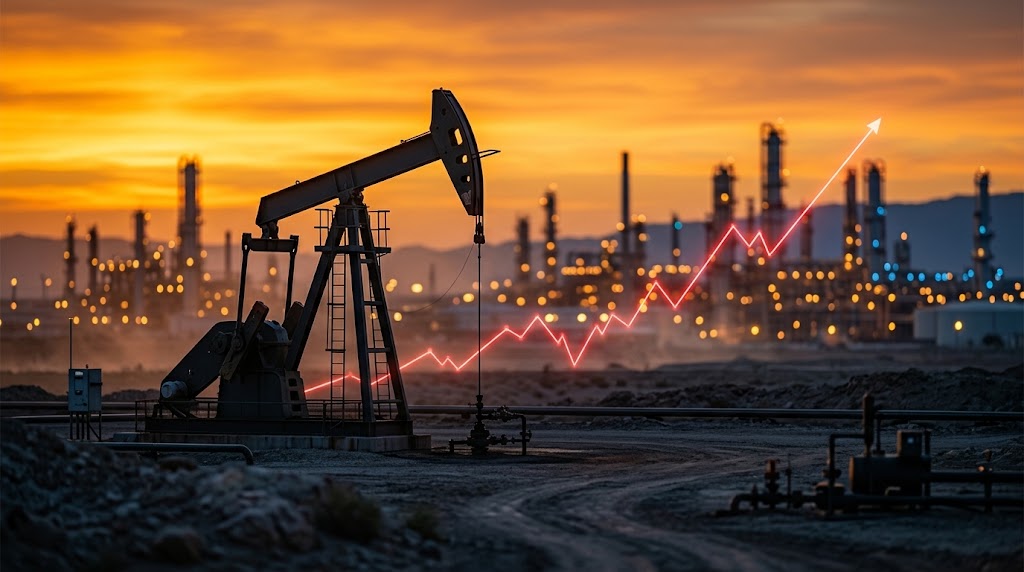
WTI crude is sitting at $101.79 a barrel today, up more than 20% over the past month. That’s not a typo and it’s not a meme stock. That’s crude oil, the boring commodity that forgot how to be boring.
What actually happened
Drones hit pumping stations on Saudi Arabia’s East-West pipeline on September 10, striking sites in the Riyadh and Medina regions. Saudi officials shut the whole thing down as a precaution.
Baghdad and Riyadh pointed to Iran-aligned militias operating out of Iraq’s Maysan Governorate. Whoever gave the order managed something impressive, taking offline a pipeline that normally moves 4 to 5 million barrels a day, something like 4 to 5% of the entire world’s crude supply, in one morning.
That pipeline wasn’t just doing its regular job either. It had spent months quietly rerouting oil around the Strait of Hormuz, which has been a mess since the US and Iran started shooting at each other. Take away the workaround and you’re left with the original problem, minus the workaround.
Same week, Houthi forces seized the island of Perim, sitting right at the mouth of the Red Sea, reportedly with direct guidance from Iran’s Revolutionary Guards. Two separate attacks, same general alignment, same seven days, and the oil market didn’t need it explained twice.
Crude jumped more than 8% that week and broke above $100 a barrel for the first time in months. The International Energy Agency says Saudi crude supply just hit its lowest level in more than thirty years, which is not a “keep an eye on this” kind of stat, it’s a “this is already happening” kind of stat.
Why it’s pulling back today
Today oil is actually down about 3.8%, even though nothing structurally changed overnight. EIA data showed US crude stockpiles fell by 640,000 barrels last week, a smaller draw than expected, which on paper leans mildly bullish.
But the market’s paying more attention to Saudi officials saying repairs could be finished within days, even though independent analysts think it’s more likely to take weeks. Markets are, as always, better at pricing a story than fact checking it.
This is also the same energy pressure Fed Chair Kevin Warsh flagged in his Jackson Hole remarks as part of why inflation hasn’t cooperated. If you read this morning’s piece on the Fed decision, this is the other half of that story, the two are basically dating.
Who wins, who loses
Energy stocks are having a good week for reasons nobody actually wants to be having a good week for. The sector rallied 1.85% today alone, and for integrated majors and E&P names, a move like this tends to flow pretty directly to the bottom line, higher realized prices on oil they’re already pulling out of the ground.
Airlines and anything with heavy fuel exposure are the mirror image. Jet fuel is a massive input cost, and a 20% oil spike shows up on the income statement a lot faster than airlines can raise ticket prices to cover it.
Consumer discretionary gets squeezed too, just more quietly. Higher gas prices work like a tax that shows up at the pump instead of on a paycheck, and it eats into the same wallet that would otherwise be funding everything else people buy.
Wall Street Reality Check: an oil shock is basically a tax hike that never has to go through Congress. Somebody’s paying for it either way, it’s just not labeled as one.
Bottom line
A pipeline moving 5% of the world’s oil doesn’t go dark quietly, and this one didn’t. Whether it’s back online in days or weeks decides a lot about where oil goes from here, and by extension, how much longer the Fed has to keep fighting the same inflation fight it was already fighting this morning.
Want to know before the next headline hits: Predictive Alpha runs your stocks through TradeSmith’s AI forecasting engine, so you see which names are exposed to moves like this one before your portfolio finds out the hard way. Oil doesn’t send a calendar invite before it moves your holdings. See how Predictive Alpha forecasts react to supply shocks like this.
Sources: