

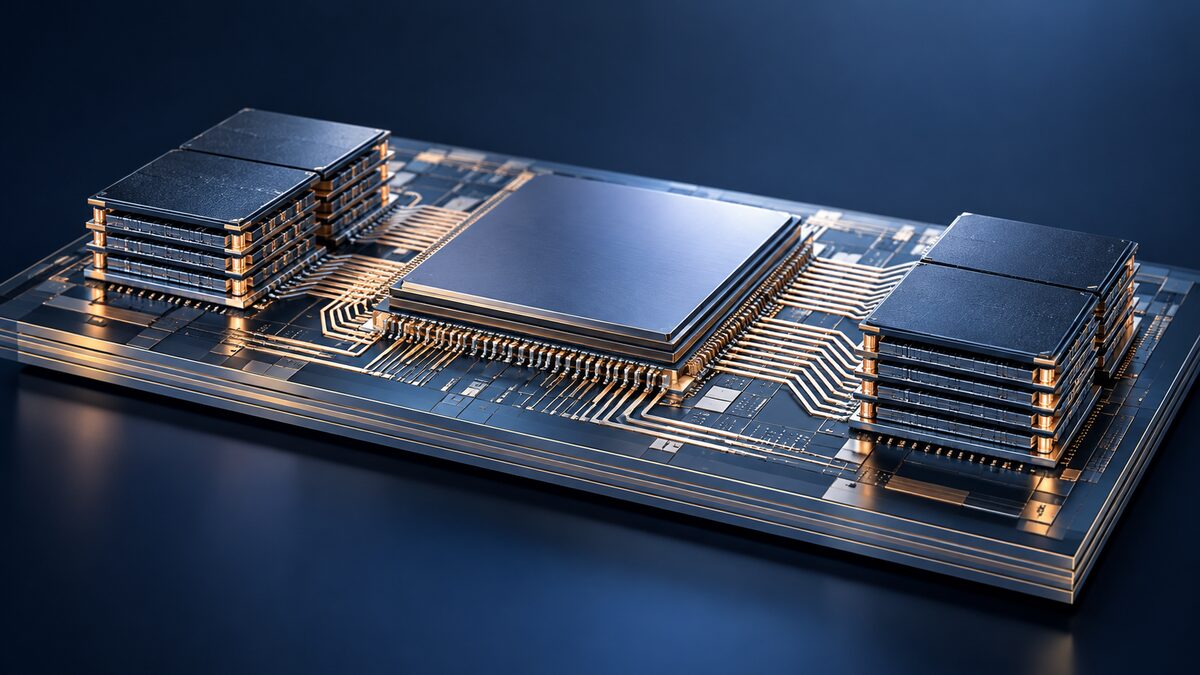
The interesting part of GlobalFoundries' new TSMC agreement is hiding underneath the chips. Literally. The companies have reached a $2 billion manufacturing agreement involving silicon interposers, components used in advanced chip packaging. For investors following the AI buildout, that's a useful reminder that the processor isn't the only part worth paying attention to.
GlobalFoundries announced the deal on October 8. It plans to add fabrication capacity at its Malta, New York site to supply TSMC's CoWoS packaging ecosystem. The agreement has an initial five-year term, with volume production expected to begin ramping in the first half of 2028.
I like the specificity: a named customer, a dollar figure and a production window. Now comes the less photogenic question: what will it take to turn that agreement into a worthwhile return?
A connecting job with a bigger role
TSMC describes CoWoS as a way to integrate computing chips and high-bandwidth memory in advanced packages. For example, its CoWoS-S technology uses a silicon interposer with dense connections to accommodate logic chiplets and memory stacks. Think of it as giving the pieces a way to work closely together. A collection of powerful components still needs good connections.
That distinction helps explain what GlobalFoundries is adding here. Its manufacturing role supports the packaging ecosystem. This announcement doesn't turn the company into the maker of every processor that might eventually sit in a finished package.
For shareholders, the appeal is the possibility of participating in AI-related manufacturing demand through a specialized component. You don't have to manufacture the most recognizable chip in the package to do economically useful work. Whether that work becomes attractive profit is a separate calculation.
The calendar belongs beside the dollar figure
The first half of 2028 is the expected start of the production ramp. A ramp is a process, so I'd be careful about treating that window as the moment a fully humming operation appears overnight. Factories aren't quite that considerate of spreadsheets.
The five-year term also needs careful handling. Dividing the headline value by five produces a simple average, but it doesn't reveal what GlobalFoundries will recognize in any particular year. It can't tell us how quickly volumes rise, when customers pay, or how costs behave along the way.
I wouldn't insert an even annual contribution into an earnings model on that basis. A more useful model would connect the production schedule to expected shipments, pricing, expenses and capital spending. Those assumptions would need company disclosures behind them, rather than a neat division problem doing all the work.
There's a genuine positive here even without that model: a specific manufacturing agreement gives the expansion a clearer commercial purpose. The distinction is between having a reason to build and knowing the return on what gets built. Both matter.
What I'd look for in the financial follow-through
My first question would be how the expansion is funded and how much cash it requires. Additional manufacturing capacity can involve spending before the associated business produces cash. The timing can make an otherwise promising project look different in an income statement and a cash-flow statement.
Next would come operating economics. Revenue alone can't answer whether this work earns an attractive margin after manufacturing expenses. Nor can it tell us the return after equipment spending. A bigger customer relationship is interesting; the money left after supporting that relationship is what ultimately matters to owners.
StockHitter’s free cash flow valuation guide explains why capital spending belongs in that assessment, alongside the income statement.
I would also keep the future expansion framework separate from the initial agreement. It creates room for the relationship to grow as demand develops. That is useful flexibility, but it isn't a reason to add another undisclosed order to today's numbers.
The investment case to watch
My takeaway is that GlobalFoundries has announced a concrete route into an important part of advanced packaging. That makes this more interesting than a vague statement about benefiting from AI. The manufacturing location and planned ramp give investors specific milestones to follow.
The next useful evidence would connect that commercial opportunity to spending, output and cash generation. If those pieces develop favorably, the agreement could become more valuable to the business than the headline alone explains. If execution or economics disappoint, a large contract number won't make those problems disappear.
For now, I'd keep the $2 billion agreement and the 2028 production ramp on the same page. It's an encouraging development to examine, with the financial payoff still dependent on the work ahead.