

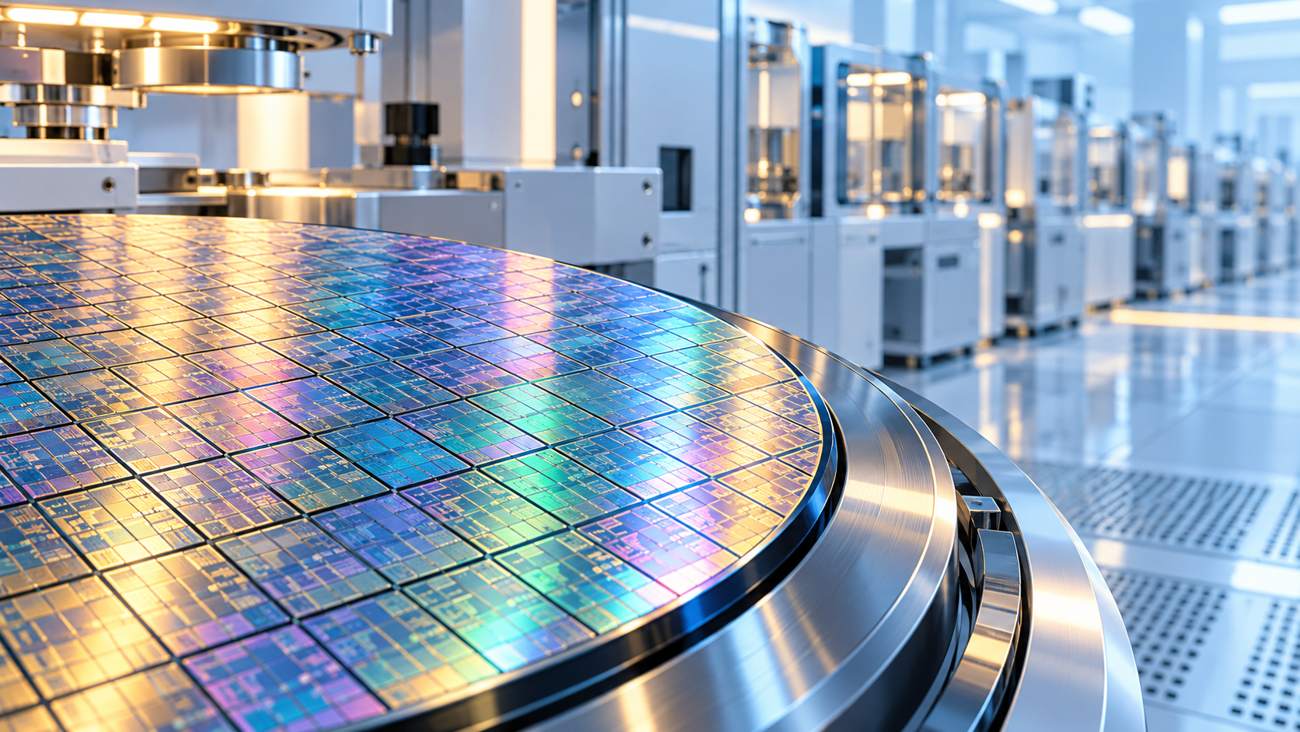
TSMC’s new chip technology is growing up fast, and apparently it has expensive taste. On October 15, the company reported third-quarter revenue of US$46.72 billion, up 41.2% from a year earlier, and forecast even bigger sales for the fourth quarter. But the detail that caught my eye sits a few lines below sales: the initial ramp of its new 2nm technology is putting pressure on gross margin.
Customers are showing up. That’s the good part. Now I want to see how much of each sales dollar is left after production costs as this rollout gets bigger. The sales number and the cost of getting those chips out the door both deserve our attention.
In its third-quarter earnings release, Taiwan Semiconductor Manufacturing reported net income attributable to shareholders of NT$763.06 billion, up 68.7% year over year. Diluted earnings were NT$29.43 per ordinary share, or US$4.60 per American depositary receipt. Those are reported results under Taiwan’s IFRS framework, rather than an adjusted earnings measure.
The 2nm ramp comes with a bill
TSMC’s management report shows that 2-nanometer technology accounted for 8% of wafer revenue in the third quarter, up from 3% in the second. The company calls this technology N2.
At the same time, gross margin slipped from 67.7% to 66.4%. That’s a decline of 1.3 percentage points. Management attributed it primarily to the initial N2 production ramp. That’s the startup bill showing up in the results.
Gross margin measures the share of revenue left after the cost of producing what a company sells, before operating expenses and other costs. Here, sales can grow quickly while that retained share narrows. Neither number cancels out the other.
Before we get too gloomy, let’s look at the comparison beside it. Last year’s third-quarter gross margin was 59.5%. The current 66.4% is substantially higher. It also landed inside TSMC’s previous 65% to 67% guidance. This was a sequential squeeze, not a gross-margin miss against the company’s own range.
I wouldn’t leap from that to poor manufacturing yields or weakening demand. We’d need separate evidence for either claim. What TSMC has disclosed is narrower: a growing new technology is carrying an initial margin cost. There’s enough to examine here without giving the numbers an imaginary subplot.
A bigger sales forecast leaves room for margin uncertainty
TSMC forecasts fourth-quarter revenue of US$52.3 billion to US$54.3 billion. The US$53.3 billion midpoint would represent about 14% growth from the third quarter, calculated from the company’s reported US-dollar revenue.
Its earnings presentation puts fourth-quarter gross margin at 65% to 67%, based on an exchange-rate assumption of NT$31.8 per US dollar. The 66% midpoint is slightly below the third quarter’s 66.4%, although the top of that range would be higher. I’d resist shortening that to “margins will fall.” The range has two ends, and we don’t get to quietly misplace the more encouraging one.
For the full year, management expects US-dollar revenue growth of around 44%. That remains a forecast. I’m interested in both outlooks. Strong demand is welcome, but it doesn’t tell us how much profit TSMC retains per sales dollar.
The sequential bottom-line comparison has its own wrinkle. The second quarter included investment gains related to Vanguard International Semiconductor and recognized earthquake insurance income that weren’t repeated in the third. That makes net-income growth a less clean read on the production ramp than it first appears. This is where I’m glad we kept reading past the headline.
The cash-flow page adds a useful counterweight
TSMC reported third-quarter free cash flow of NT$476.56 billion, using operating cash flow minus capital expenditures. That was up from NT$287.36 billion in the second quarter. Operating cash increased, while quarterly capital spending declined.
I like seeing more cash left over while the company is still investing heavily. I’m less eager to assume the equipment bills will stay smaller just because they did this quarter. Construction and equipment payments can move the quarterly comparison around considerably.
There’s another distinction worth keeping: the cash balance also benefited from other investing inflows that management said primarily reflected U.S. Treasury investment tax credits. Those shouldn’t all be described as cash generated by selling chips. The unaudited financial statements separate operating and investing cash flows.
For everyday investors reading an earnings report beyond the headline, this is a useful pairing to carry into TSMC’s next update: how far N2 expands, and what happens to margins and cash generation alongside it. Today’s figures show substantial growth with an identifiable rollout cost. They don’t settle how quickly that cost eases, or what price makes the stock attractive.