

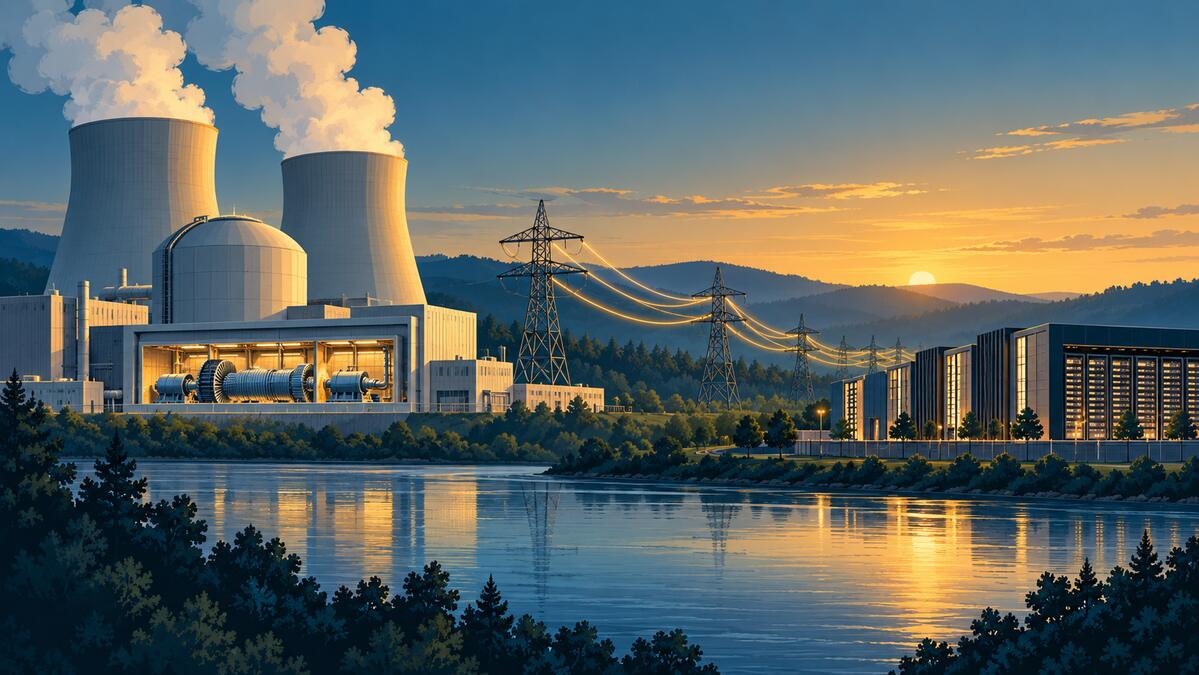
Google’s latest nuclear deal has a detail I like: the additional nuclear electricity is supposed to come from plants that already exist. No brand-new reactor has to appear before the first upgrade can start producing more power. For Constellation shareholders, though, the interesting question is what it costs to make that happen.
The companies’ October 6 announcement combines new nuclear capacity with a much larger agreement covering existing supply. Put those together carelessly and this becomes a bigger construction story than it actually is. Let’s separate the two before opening the spreadsheet.
Two agreements, two different jobs
Under the 20-year power purchase agreement, Constellation plans to add 890 megawatts of nuclear capacity through upgrades at 11 units across six sites in Illinois, Pennsylvania and New Jersey. The company says the collaboration represents more than $4.3 billion of investment by Constellation.
Separately, Google signed a 15-year agreement for 2,700 MW of existing generation supply in the PJM market. That gives operating assets longer-term revenue visibility, without making their existing output newly built capacity.
Together, the agreements cover 3,590 MW, or 3.59 gigawatts. The new nuclear portion is roughly one-quarter of that total. Reuters also reports that the separate 2,700 MW supply is not tied to a specific generation source. Calling the entire package new nuclear power would get both distinctions wrong.
Constellation trades on Nasdaq as CEG. Its opportunity here includes investing in additional output and securing business for generation it already operates.
The first upgrade and the full program have different delivery targets
Constellation expects the first uprate by 2028. Google’s companion announcement says the projects will add the full 890 MW before the end of 2032. Those dates belong together. The earlier one marks the expected start of delivery, not completion of the whole program.
An uprate increases output from an existing reactor. Google describes modernizing turbines, steam generators and digital controls, with its long-term purchases helping support the investment. There’s an appealing practicality to getting more from infrastructure already in place.
Existing equipment still needs engineering work, installation and regulatory attention. The Nuclear Regulatory Commission explains that increasing a reactor’s licensed power level requires an operating-license amendment and a safety review. A signed commercial agreement doesn’t finish that work.
I’d watch the individual project milestones rather than treat 2028 as a switch that turns on every promised megawatt. The pace of completed upgrades determines how quickly the additional output can contribute.
The $4.3 billion is an investment bill
This is the number I’d be especially careful with. Constellation’s more-than-$4.3-billion figure describes investment, not the value of Google’s payments or revenue Constellation has already earned. The two companies’ announcements don’t provide an electricity price or a project-level earnings forecast from which to calculate the return.
A long-term customer commitment can make spending easier to plan. Shareholders still need to consider the construction bill, financing costs, operating expenses and the economics of the power contracts. A dependable buyer is valuable; the price and cost of serving that buyer matter, too.
That’s where free cash flow becomes useful. Capital spending can absorb cash before the completed upgrades generate their intended contribution. I’d look for spending schedules alongside management’s progress reports, rather than judge the project from a single quarter’s cash movement.
Google has more than one role here
Google, part of Alphabet, is also supplying technology. An expanded five-year alliance calls for Constellation to use Google Cloud and Gemini Enterprise in planning, plant operations and infrastructure security. The companies want these tools to help accelerate delivery and improve performance. Those are objectives, not measured savings disclosed in this announcement.
The collaboration also includes demand-response capabilities to reduce non-critical consumption during grid stress, plus a framework to evaluate further generation, storage and demand-response opportunities. I wouldn’t count those possible future projects as committed construction.
Google says its role as an anchor customer will keep the uprate costs from falling on other grid customers. That’s an important part of its stated approach, although it isn’t a promise that everyone’s electricity bill will decline.
What interests me most is the combination: an established fleet, a long-term buyer and a defined path to adding output. For shareholders, the next useful evidence will be how that path develops into approved upgrades, completed work and cash earned after the investment. There’s plenty to follow here without pretending the whole payoff arrives in 2028.
This article is for general information and education, not personalized investment advice. Investing involves risk, including loss of principal.