

I usually let Saturday keep its weekend privileges. Then Toshiba gave me a reason to make an exception. Apparently, we’re doing a little hard-drive homework.
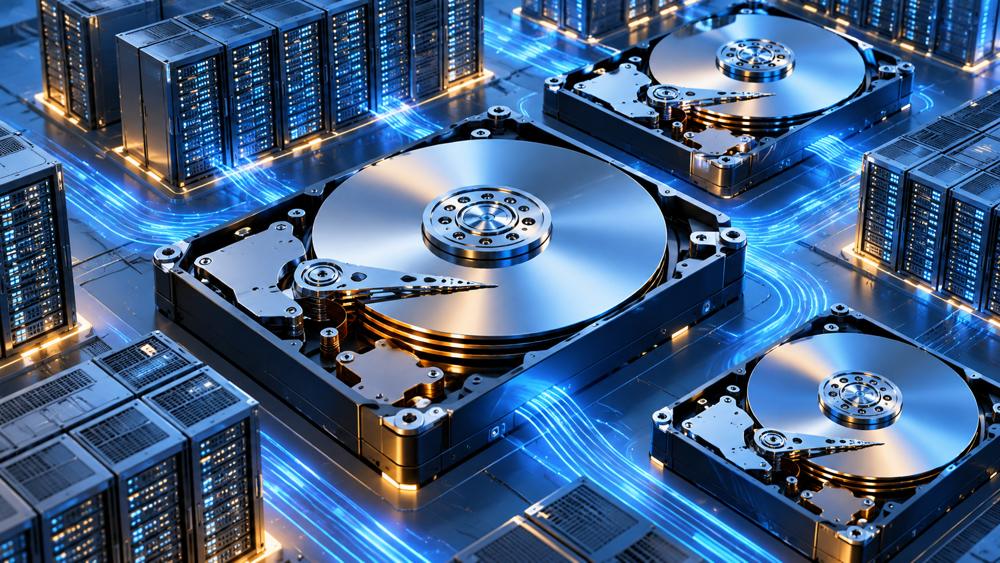
In a Friday, October 2 announcement, Toshiba said its Philippine manufacturing subsidiary had made its first shipment from an expanded nearline hard-drive production line at Laguna Technopark. These are high-capacity drives for data centers. The company points to AI and cloud demand as the reason to expand.
That gets interesting for investors in Seagate and Western Digital. Growing storage demand can be wonderful for a supplier. If those customers get more choices, rival suppliers may find the story slightly less festive.
The small qualifier doing a lot of work
Toshiba Information Equipment (Philippines) aims to nearly double its annual production capacity by fiscal 2027 compared with fiscal 2025, measured by storage capacity. That’s a target for how much data the drives can hold, not a promise to manufacture twice as many individual drives. Factory capacity also isn’t the same as storage actually shipped to customers.
Give that distinction a little elbow room. Increasing the storage inside each drive can lift total capacity without an equivalent increase in the number of drives leaving a factory.
Toshiba’s March 31 announcement of its M12 series illustrates the technology side: the company said sample shipments of nearline drives with 30 to 34 terabytes of storage using shingled magnetic recording had begun. That earlier sampling announcement doesn’t identify what shipped from the expanded line in October. It does show why counting boxes alone can miss part of the storage story.
Friday’s release doesn’t give a baseline capacity figure. That limits what we can calculate from the announcement, including how much additional storage the plan could add in absolute terms.
For shareholders, I’d separate three things: the capacity a manufacturer can produce, the amount customers actually buy, and the profit on those sales. They can move at different speeds. A bigger production plan doesn’t automatically come with a bigger earnings check tucked inside.
Seagate and Western Digital have something worth defending
There’s real profitability behind the excitement. Seagate’s July 28 earnings release reported fiscal fourth-quarter revenue of $3.63 billion and a GAAP gross margin of 52.3%, up from 37.4% a year earlier. The quarter ended July 3, 2026. Seagate management credited robust cloud-data-center demand and disciplined execution.
For Seagate (NASDAQ: STX), the question I’d bring forward is how much of that profitability can hold if Toshiba’s ramp gives customers more supply options. Its technology and manufacturing costs belong in that answer, too.
Western Digital’s August 5 results showed $3.75 billion in fiscal fourth-quarter revenue and a 54.1% GAAP gross margin, versus 41.0% a year earlier. That quarter also ended July 3. Western Digital (NASDAQ: WDC) explicitly lists competitive products and pricing among its business risks.
Those are historical results, not a reading of today’s pricing. Still, they explain why I’d linger over the margin discussion rather than stop at an AI-demand headline. There’s a healthy business here to examine, and future supply matters to what customers may be willing to pay.
I’d watch what happens per terabyte
The useful question is whether additional storage supply arrives faster than customers need it. If demand absorbs the expansion, suppliers could keep growing. If capacity gets ahead of orders, buyers could gain negotiating power and margins could face pressure. Toshiba’s announcement alone can’t tell us which path wins.
Here’s where the next round of company disclosures could help:
- Storage shipped and pricing: Is more capacity reaching customers, and what is happening to revenue per terabyte? A higher-capacity drive can cost more per unit even as its price per terabyte falls.
- Margins and manufacturing costs: Can denser drives lower costs enough to offset pricing pressure? I’d compare each company’s GAAP gross margin with its own prior periods.
- Cash and expansion spending: Are operating cash flows supporting the investment, or is spending running ahead? Revenue growth deserves a companion check on the cash left after capital expenditures.
Our guide to reading an earnings report walks through those financial checks. For this particular story, I’d keep capacity, pricing and cash together on the same page. The shiny AI label doesn’t get to excuse the economics underneath it.
That’s what makes this worth a Saturday detour: a good demand story can attract the very supply that changes its profitability. I’m curious about the next evidence from customers and manufacturers, before promoting a factory milestone into a verdict on either stock.
Want another way to research stock ideas?
TradeSmith’s Predictive Alpha uses AI to generate short-term stock forecasts and a Top 5 Watchlist. If that approach interests you, our Predictive Alpha review covers the service and its risks. Forecasts can be wrong, and this article doesn’t establish that any company discussed here is a current pick.
Affiliate disclosure: StockHitter may earn a commission if you purchase through the link below.
For general education, not personalized investment advice. Investing involves risk.